



It’s almost the new year, which means it’s time to start thinking about those resolutions and building healthy habits for 2020. Maybe you want to hit the gym more often. Maybe you want to read more books. Maybe you keep meaning to floss more, but you always seem to misplace your dental floss. That’s why we have written this guide on how to get you more into the habit of flossing ahead of 2020.
 Countless clinical studies have connected oral health to overall wellbeing, which includes mental and physical wellness. That means that the healthier your teeth and gums are, the healthier the rest of your body is. When you schedule semi-annual dental checkups, your dentist will conduct a series of examinations and screenings to ensure that no life-threatening illnesses are lingering or causing your mouth to exhibit symptoms. The best part about these being routine is that it gives those health conditions little to no chance of developing into their late stages. Read on to learn what tests your dentist conducts at your routine appointments to ensure your overall wellbeing.
  Around 1 in 4 Americans don’t have dental insurance, which can make it very difficult to get the dental care they need. Unfortunately, however, even insured people often miss out on the benefits of their plan because they don’t have the information they need to take advantage of it. If you think you may fall into this category, you’ve come to the right place! Keep reading to learn why using your dental insurance is so important for your oral health (and wallet), and how the first step is seeing a dentist before it expires.
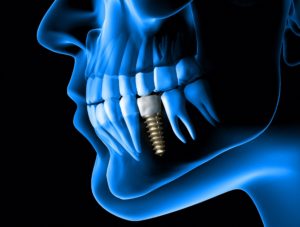 If you’re missing teeth, dental implants rise above all other tooth replacement options. Unlike any other treatment, they replicate the entire tooth structure. This offers exceptional benefits because they closely look and feel natural. They are also proven to last with over a 95% success rate to invest in your oral health while completely transforming your daily life. Here are 5 ways
 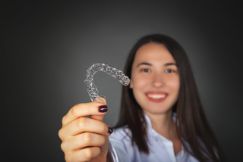 Having multiple oral health problems can feel overwhelming, but it’s not uncommon (especially as we age) to have more than one issue to address. A perfect example is having gum disease while also wanting to straighten your teeth. Many adults would prefer to straighten their teeth discreetly, and Invisalign in Bowie is a wonderful way to do that. But, to get the best results, it’s important to make sure that your gums and underlying jawbone are adequately healthy beforehand. Keep reading below to learn about the many advantages of Invisalign and whether it can still work for you if you have gum disease.
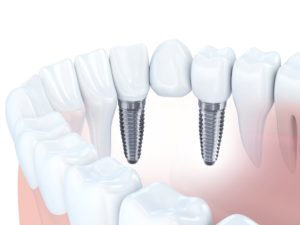 Tooth loss remains a common problem despite several advancements in dentistry. In fact, 120 million Americans are missing at least one tooth. 15 million people in the U.S. have chosen a fixed bridge to fill the space of 1 to 3 consecutive missing teeth because it is affordable and convenient. Unfortunately, they only last for about 5 years. When your bridge starts to fail, you could choose to have it replaced, or you can enjoy the next best thing to your real teeth with dental implants in Bowie. You can
 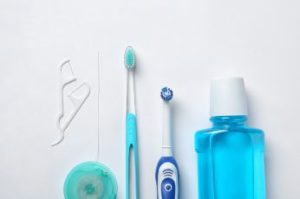 Any family dentist will tell you that the best way to minimize getting fillings, crowns, and other dental work is to establish good oral hygiene habits at home. Of course, it’s also necessary to get professional cleanings, but since most people only get those twice a year, what you do the other 363 days of the year is just as important! Keep reading for 10 great tips that will make your oral hygiene routine efficient and effective – you’ll be one step closer to having a healthy, beautiful smile (and staying out of the dental chair!)
 Vacations always come with their fair share of photos to remember your favorite moments. Of course, would you really want to remember these moments with pictures of you giving tight-lipped smiles or even worse, avoiding photos altogether? With treatments from your
 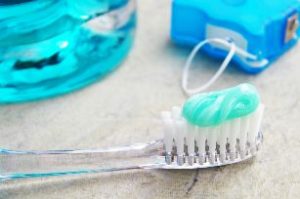 If you’ve ever wondered if brushing and flossing really makes a difference, check out this statistic: People with good oral hygiene have an estimated 1,000 to 100,000 bacteria on each tooth. People without good hygiene have between 100 million and 1 billion bacteria on every tooth. That’s a big difference!
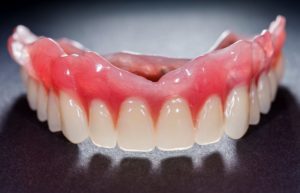 So, you’ve just gotten your brand-new dentures made. You can smile again and eat a ton of foods you weren’t able to before. While your